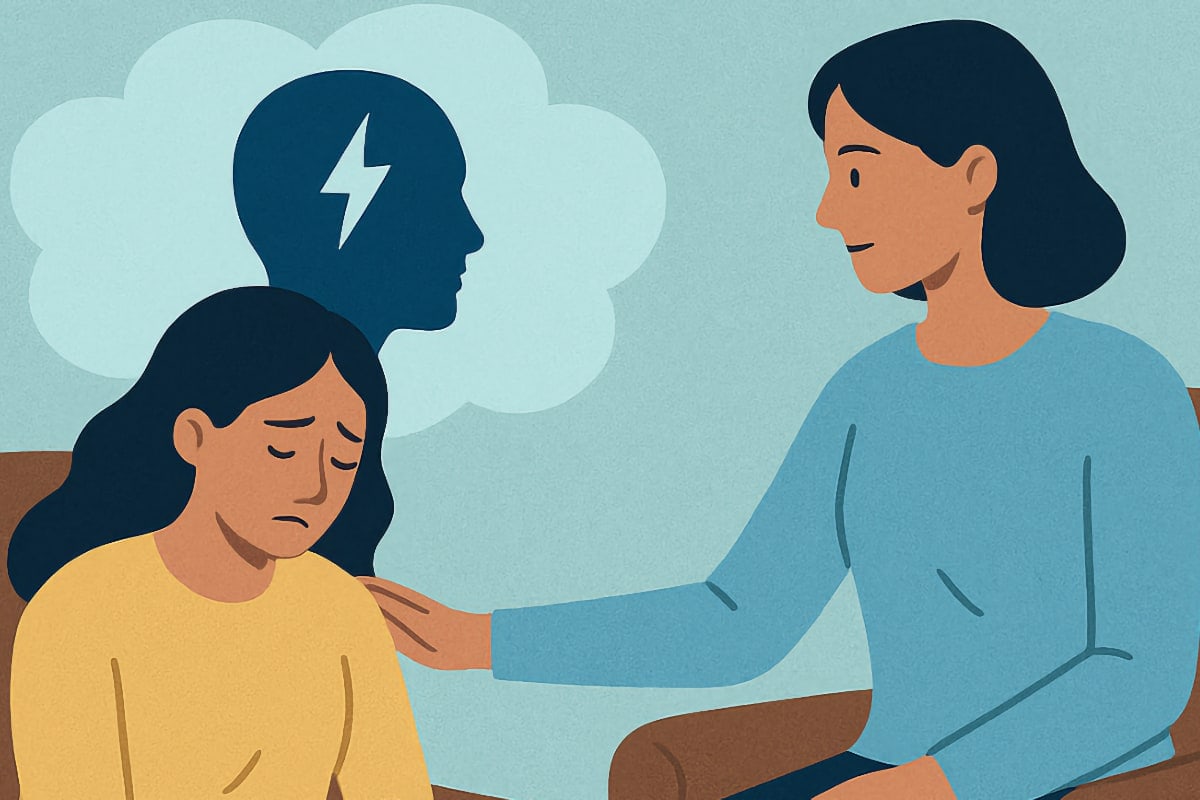
The Two Brain Networks Behind ADHD: Why Focus and Daydreaming Feel So Connected
People with ADHD often describe their minds as having two speeds; intensely focused or completely scattered. One minute everything clicks, and the next, thoughts drift in every direction at once.
According to Dr. Edward Hallowell and Dr. John Ratey in their book ADHD 2.0, this experience isn’t random, it’s actually how the ADHD brain is wired. Two brain networks are constantly in play, the Task Positive Network (TPN) and the Default Mode Network (DMN).
Understanding these networks can help make sense of why attention feels so unpredictable, and why the ADHD brain is also so imaginative and full of ideas.
🧠 The Task Positive Network (TPN): The Focus System
The TPN is like the brain’s “work mode.” It activates when attention is directed toward the outside world, such as reading, solving a problem, following instructions, or completing a task.
In neurotypical brains, this network turns on when it’s time to focus and powers down when the mind is at rest. It helps people get things done, stay organized, and move through tasks efficiently.
🌙 The Default Mode Network (DMN): The Imagination System
The DMN is the “daydream network.” It comes alive when the mind wanders, during quiet moments, creative thinking, reflection, or imagining future possibilities.
This network is responsible for internal thoughts, self-reflection, and creativity. It fuels big ideas and “what if” moments, the kind of thinking that leads to innovation, art, and insight.
⚡ The ADHD Difference: When Both Networks Stay On
Here’s where things get tricky.
In most brains, the TPN and DMN work like a seesaw. When one turns on, the other turns off. Focus mode replaces daydream mode, and vice versa.
But in ADHD brains, that switch doesn’t always work smoothly. The DMN, the wandering, imaginative system, tends to stay active even when the person is trying to focus. It’s like having two radio stations playing at once, one saying “focus on the task,” and the other whispering “but what about that idea you had five minutes ago?”
This overlap can make it hard to stay on track, but it also explains why ADHD minds are often bursting with creativity and new ideas.
💡 The Gift in the Mix
The same wiring that makes focus challenging can also make the ADHD brain brilliantly original. When the DMN and TPN interact, they create space for unexpected ideas, deep curiosity, and imaginative problem-solving.
People with ADHD often see patterns others miss, come up with out-of-the-box solutions, and make intuitive leaps that drive creativity and innovation.
The goal isn’t to turn off the DMN, it’s to find balance between these two systems.
🧭 Finding That Balance
The key for ADHD brains isn’t trying to suppress the daydreaming DMN, it’s learning how to guide it so it works alongside the TPN instead of against it. Building this balance doesn’t happen overnight, but small strategies can help the brain switch more smoothly between focus and imagination:
1. Exercise regularly – Physical movement doesn’t just help the body, it wakes up the TPN, increases alertness, and primes the brain for focus. Even short walks or stretching breaks can reset attention.
2. Leverage interest and curiosity – Tasks that capture genuine curiosity naturally engage both networks, making it easier to sustain attention without feeling forced.
3. Create structured flow – Breaking work into small, achievable chunks with clear goals gives the TPN a path to follow, while still leaving room for creativity to sneak in.
4. Use mindful pauses – Short pauses, breathing exercises, or brief reflection can help the brain reset, preventing overwhelm when both networks are competing for attention.
5. Engage in meaningful “flow” activities – Hobbies, creative projects, or work that feels intrinsically rewarding allow the TPN and DMN to sync, producing focus, enjoyment, and innovation all at once.
By intentionally designing the day to include movement, curiosity-driven tasks, and structured breaks, ADHD brains can learn to ride the energy of both networks, transforming what once felt like distraction into a source of creativity and productivity.
❤ The Takeaway
ADHD isn’t about having a broken attention system, it’s about having a brain that is wired for both focus and imagination.
The TPN and DMN show that attention in ADHD isn’t missing, it’s just moving differently. When those two networks learn to work together, the ADHD brain can shine in its full creative, energetic, and brilliant potential.